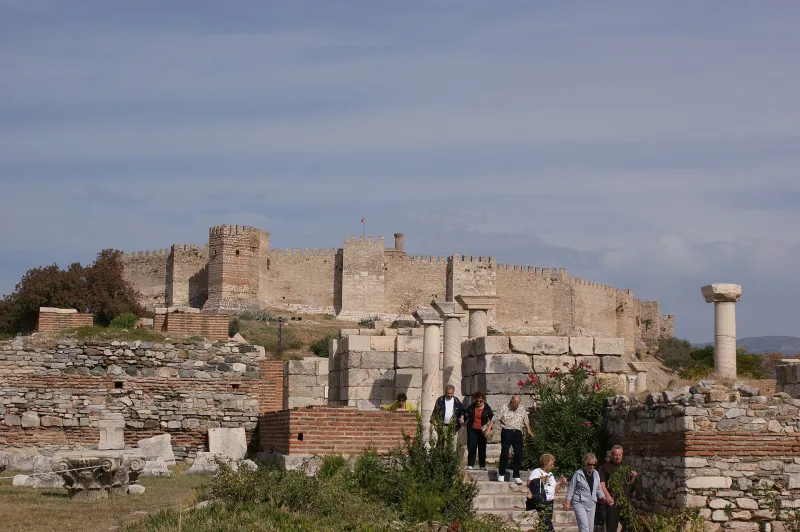
Ayasuluk Hill — the Basilica of St. John and the fortress near Ephesus

Ayasuluk Hill—Where Ephesus Met the Middle Ages

When coastal Ephesus began to suffocate from the silting up of the harbor and malaria, the inhabitants abandoned the great marble city and climbed this hill. Ayasuluk Hill (Ayasuluk Tepesi)—an ancient mound near Selçuk—welcomed the people of Ephesus, became the capital of the Aydinoglu Beylik, and preserves layers of history on its slopes, from the Bronze Age to the Ottoman era. Today, the ruins of the Basilica of St. John, built by Justinian in the 6th century, and a Seljuk-Ottoman fortress stand here, and the entire complex is part of the UNESCO World Heritage Site “Ephesus.” Ayasuluk Hill and Ephesus are separated by a few kilometers but are inextricably linked: the former is the matrix from which the latter grew, and the refuge to which it returned at the end of its history. For the traveler, this place offers a completely different perspective on Ephesus—not through the marble of the Library of Celsus, but through the stones of the medieval fortress overlooking the valley where the sea once was.

History and Origins of Ayasuluk Hill

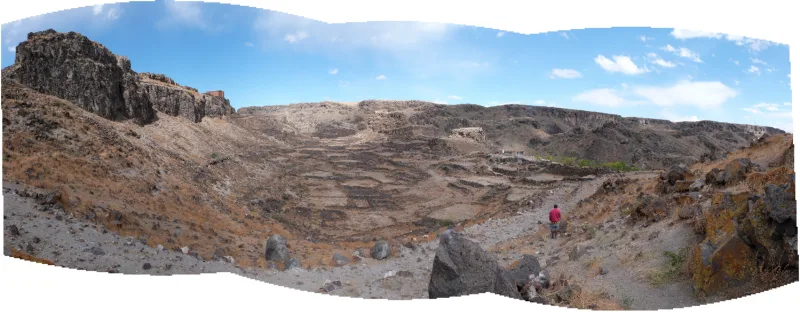
The earliest traces of habitation on Ayasuluk Hill date to the Late Chalcolithic and Early Bronze Age. At that time, the seashore reached the western slope of the hill—this explains why a fortified settlement arose here: the hill served as a natural watchtower overlooking a convenient bay. During the Late Bronze Age, tumulus tombs and fortifications appeared here; finds include Mycenaean pottery and seals. Most researchers tend to identify this settlement with Apasa—the capital of the kingdom of Arzawa, mentioned in Hittite sources.

From the turn of the millennium through the Hellenistic era, early Ephesus was concentrated precisely on Ayasuluk and its surroundings—before the general Lysimachus, in the 3rd century BCE, moved the city to a new, more monumental site at the foot of the Panair and Bülbül hills. Since then, Ayasuluk Hill has lost its urban significance but retained its religious importance: according to tradition, it was here that John the Theologian was buried.

In the 5th century CE, a small basilica-style church was erected over the supposed tomb of the apostle. In the 6th century, it was damaged by earthquakes, and Empress Theodora, due to illness, wrote to her husband asking him to restore the shrine. Justinian I responded to the request: in 535/536, construction began on a new, grandiose domed basilica with a cruciform plan—in the same style as the Church of the Holy Apostles in Constantinople. Contemporaries called it one of the wonders of the medieval world; it was built alongside Hagia Sophia and the Basilica of Sant’Apollinare Nuovo in Ravenna.

In the 7th century, following the outbreak of the Arab-Byzantine wars and the mass migration of the people of Ephesus from the marshy coast to the hill, Ayasuluk once again became the main settlement. Fortification walls were erected to protect the basilica. In 1304, the hill was captured by the Seljuk dynasty, which converted the basilica into a mosque. In 1402, Tamerlane’s troops destroyed most of the structures. Subsequently, the fortress was restored by both Seljuk and Ottoman rulers. From 1920 to 1922, the hill was under Greek occupation during the Greco-Turkish War. Greek archaeologist G.A. Sotiriou excavated the tomb of John the Apostle and found it empty: the relics had been transferred to Constantinople as early as the 6th century.

Architecture and What to See

Ayasuluk Hill is part of the Selçuk tourist complex and is included in a combined ticket with the Basilica of St. John. The fortress and the ruins of the basilica are the main attractions.

Basilica of St. John the Theologian

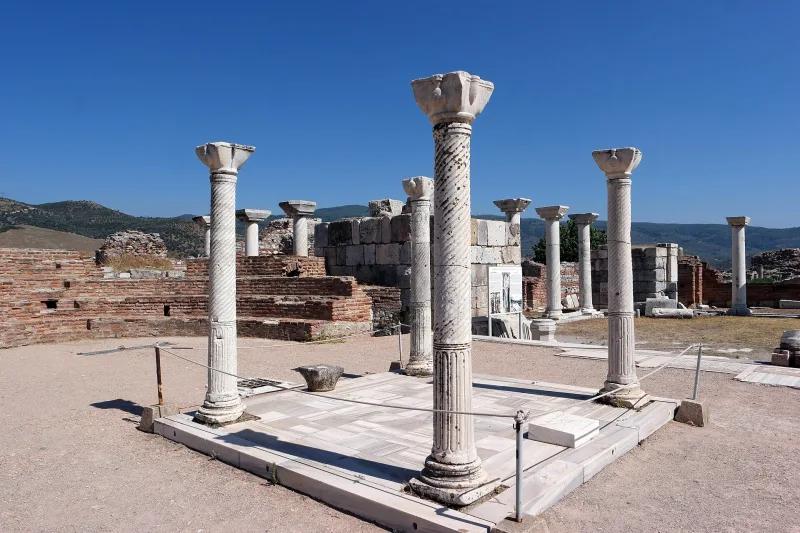
The basilica, built by Justinian in the 6th century, was one of the largest Christian churches of its time. Its design—a domed cruciform basilica—was directly inspired by the Church of the Holy Apostles in Constantinople. The current ruins—fragments of colonnades, arches, and brickwork—give only a faint idea of its former scale. Several columns and portals were restored during a restoration project funded by American religious foundations after 1923. The tomb of John the Apostle is marked in the central nave—four massive columns once supported the dome above this spot.

Ayasuluk Fortress

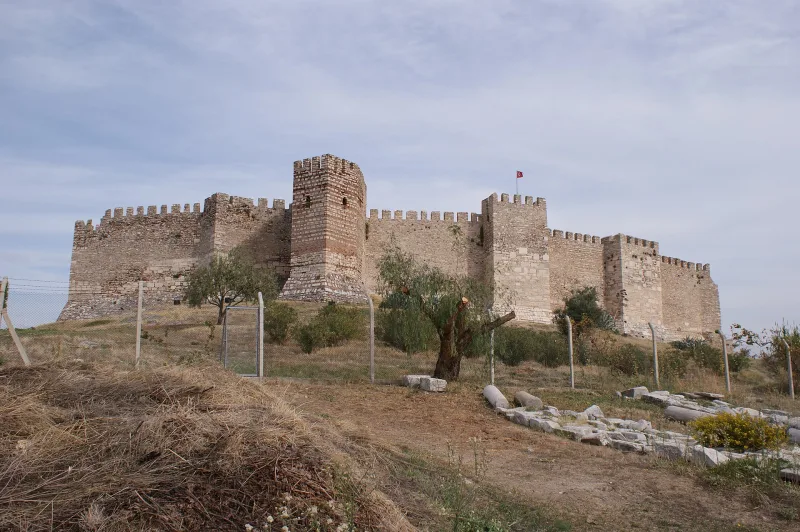
The Seljuk-Ottoman fortress was built of rubble stone and spolia—reused ancient and Byzantine building blocks. The outer wall is reinforced by 15 towers; the inner citadel has two entrances—western and eastern. The western gate is protected by projecting walls. Inside the fortress, five water cisterns have been preserved; one of them is the converted apse (eastern part) of the Justinian Basilica, which was turned into a reservoir after the Seljuk conquest.

Aqueduct and Water Supply

To supply the hill with water, a branch of the aqueduct about 650 meters long was built, presumably as early as the Justinian era. The water sources were located between Belevi and Selçuk, in the Pranğa area. Fragments of the aqueduct have survived and today reach heights of up to 15 meters in places.

The Pursuit Gate and İsa Bey Mosque

At the foot of the hill stands the Isa Bey Mosque (İsa Bey Camii, 1375), built by Fahreddin Isa Bey of the Aydinoglu clan—during the period when Ayasuluk was the capital of the beylik. The carvings on the mosque’s gate echo the decoration of the fortress pavilion on the hill—it appears they were built simultaneously by the same craftsmen.

Interesting Facts and Legends

  • The Greek medieval name of the hill—Theologos (Θεολόγος), meaning “Theologian”—gave rise to the current Turkish name Ayasuluk through the following chain: Hagios Theológos → Agios Theologos → Ayasuluk.
  • The Basilica of Justinian was built concurrently with the famous Hagia Sophia in Constantinople and the Basilica of Sant’Apollinare Nuovo in Ravenna—during one of the most ambitious construction programs in Byzantine history.
  • In the 1920s, Greek archaeologist G.A. Sotiriou discovered that the tomb of John the Apostle was empty: the relics had been transferred to Constantinople in the 6th century. This discovery did not diminish the site’s significance as a pilgrimage destination—the tomb is still venerated today.
  • Six layers of habitation dating from the Early Bronze Age to the Late Antique period have been identified on the hill. This makes Ayasuluk one of the key sites for understanding the pre-Byzantine history of the region.

How to get there

Ayasuluk Hill is located in the town of Selçuk, in the province of İzmir, approximately 3 km north of the main ruins of Ephesus. The nearest airport is İzmir Adnan Menderes (ADB); from there, it is about 70 km to Selçuk by İZBAN train or bus (1–1.5 hours). IZBAN trains stop directly in Selçuk.

In Selçuk itself, you can walk to Ayasuluk Hill from the train station (15–20 minutes) or take a taxi. The complex is located in the northern part of the town, near the Basilica of St. John and the Isa Bey Mosque. Tickets are sold at the entrance; a combined ticket with other sites in Selçuk is often available.

For travelers from Kusadasi, it’s about a 20-kilometer ride by dolmus. Drivers can use the parking lot at the foot of the hill.

Tips for travelers

It makes sense to include Ayasuluk Hill in your itinerary along with the main ruins of Ephesus and the Selçuk Archaeological Museum. The ideal order: in the morning—Ephesus (starting from the upper gate), in the afternoon—Ayasuluk and the Basilica of St. John, and in the evening—the Selçuk Museum. This itinerary allows you to see all the eras of Ephesus’s history in chronological order.

Allow 1.5–2 hours to explore the Basilica and fortress complex. The climb up the hill is not difficult, but requires comfortable shoes—the cobblestone path is uneven. During the hot months, bring water: there is little shade, and the July sun beats down fiercely on the open ruins.

The special value of Ayasuluk lies in the view from the top of the fortress over the valley—where there used to be a sea bay and now there are fields—and the distant silhouette of Bülbül Hill above Ephesus. It is from this vantage point that you understand how the entire geographical system functioned: Ayasuluk Hill as a watchtower, Ephesus as a trading city by the water, and the sea, which ultimately betrayed its master—retreating and leaving the port without purpose. Combine Ayasuluk Hill with the village of Sirince and the ruins of the Temple of Artemis—and you’ll have one of the best day trips in Aegean Turkey.
Your comfort is important to us, click on the desired marker to create a route.
Meeting for minutes before
Yesterday. 17:48
Frequently asked questions — Ayasuluk Hill — the Basilica of St. John and the fortress near Ephesus Answers to frequently asked questions about Ayasuluk Hill — the Basilica of St. John and the fortress near Ephesus. Information about the service's operation, capabilities, and use.
The Ayasuluk Hill is an ancient mound near Selçuk, where six settlement layers have been identified, dating from the Early Bronze Age to the Late Antique period. It was here that the early city of Ephesus was located before Lysimachus relocated it in the 3rd century BCE. When classical Ephesus was abandoned due to the silting up of the harbor and malaria, the inhabitants returned to Ayasuluk. The hill reveals the history of the region both before and after the great city—and thus offers a fundamentally different perspective on Ephesian civilization than the famous marble ruins.
Yes. Ayasuluk Hill, along with the Basilica of St. John and the fortress, is part of the UNESCO World Heritage Site “Ephesus.” Although the hill itself is a distinct geographical and historical site, it is considered an integral part of the Ephesus complex.
The name derives from the medieval Greek word *Theologos* (Θεολόγος)—“Theologian”—which was used to refer to John the Apostle. The chain of transformations looks like this: Hagios Theológos → Agios Theologos → Ayasuluk. Thus, the modern Turkish name literally preserves the memory of the Christian veneration of the Apostle John.
According to legend, John the Theologian was buried on Ayasuluk Hill. In the 5th century, a small church was erected over the supposed tomb, and in the 6th century, Justinian I built a grand domed basilica there. However, in the 1920s, Greek archaeologist G.A. Sotiriou discovered that the tomb was empty: the apostle’s relics had been transferred to Constantinople as early as the 6th century. Nevertheless, the tomb in the central nave of the basilica remains a place of pilgrimage to this day.
In 535/536, Justinian I began construction of a grand domed basilica with a cruciform plan over the tomb of John the Apostle. Its architectural model was the Church of the Holy Apostles in Constantinople. It is noteworthy that the basilica at Ayasuluk was built simultaneously with Hagia Sophia and the Basilica of Sant’Apollinare Nuovo in Ravenna—during one of the most ambitious construction programs in Byzantine history. Contemporaries considered it one of the wonders of the medieval world.
Yes, when visiting the complex, a combined ticket is typically available, which includes St. John’s Basilica and the Ayasuluk Fortress. Often, the ticket also covers other sites in Selçuk. Please check the current terms and conditions at the ticket office upon entry or on the official website, as prices and the contents of the combined ticket are subject to change.
The Seljuk-Ottoman fortress was built of rubble stone and spolia—that is, reused ancient and Byzantine building blocks. The outer wall is reinforced by 15 towers. Inside the fortress, five water cisterns have been preserved; one of them is the former apse of the Justinian Basilica, converted into a reservoir after the Seljuk conquest in 1304.
The best time to visit is spring (April–May) and fall (September–October). During these months, the weather is pleasant, there is no sweltering summer heat, and the ruins are particularly picturesque. In summer, especially in July–August, the open areas on the hill get very hot: there is little shade, and climbing the uneven cobblestones in the heat requires good physical fitness. In winter, the site is open, there are fewer tourists, but some days may be rainy.
Yes, and the connection is direct. The İsa Bey Camii mosque at the foot of the hill was built in 1375 by Fahreddin İsa Bey of the Aydinoglu clan during the period when Ayasuluk was the capital of the beylik. The carvings on the mosque’s gate echo the decoration of the fortress pavilion on the hill—it appears that both structures were built simultaneously by the same craftsmen. The mosque is a must-see when visiting the complex.
The hike is easy and accessible to most hikers without any special training. However, the old stone pavement is uneven, so sturdy shoes with non-slip soles are a must. During the hot months, it’s recommended to bring water with you, as there is little shade along the route. Some sections may be difficult for people with limited mobility.
Yes, the Ayasuluk complex is a standalone tourist attraction with its own entrance and tickets. However, if time permits, it is highly recommended to visit both sites: they complement each other historically. Ayasuluk showcases pre-Ephesian history and its medieval continuation, while Classical Ephesus represents the peak of Greco-Roman civilization in the region. The distance between them is about 3 km.
Apasa is believed to be the capital of the kingdom of Arzawa, mentioned in Hittite sources from the second millennium BCE. Most researchers tend to identify this settlement with the site on Ayasuluk Hill, where Mycenaean pottery, seals, and cist graves from the Late Bronze Age have been found. If this identification is correct, Ayasuluk Hill preserves the memory of a civilization that existed a thousand years before classical Ephesus.
User manual — Ayasuluk Hill — the Basilica of St. John and the fortress near Ephesus Ayasuluk Hill — the Basilica of St. John and the fortress near Ephesus User Guide with a description of the main functions, features, and principles of use.
Plan your visit for spring or fall to avoid the summer heat. Allow at least 6–7 hours for your day in Selçuk: in the morning, start with the ruins of Ancient Ephesus (enter through the upper gate); in the afternoon, head to Ayasuluk Hill and the Basilica of St. John; and in the evening, visit the Selçuk Archaeological Museum. This itinerary provides a chronologically coherent overview of Ephesus’s history.
The most convenient way to get there from Izmir is by İZBAN train: it’s about 70 km, with a travel time of 1–1.5 hours, and the train stops right in Selçuk. From Kuşadası, take a dolmuş; it’s about 20 km. Drivers should note that there is a parking lot at the foot of the hill. The nearest international airport is Izmir Adnan Menderes (ADB).
It’s a 15–20-minute walk from Selçuk Train Station to Ayasuluk Hill, or a few minutes by taxi. The complex is located in the northern part of town, next to the İsa Bey Mosque. Tickets are sold at the entrance; check for a combined ticket—it often covers the Basilica of St. John, the fortress, and other sites in Selçuk, which is more cost-effective than buying them separately.
Start your tour with the ruins of the 6th-century Basilica of Justinian: take a closer look at the restored colonnades, arches, and portals. In the central nave, look for the marked tomb of John the Apostle—four massive columns once supported a dome above it. Information plaques help you grasp the scale of the original structure, which contemporaries considered one of the wonders of the medieval world.
Wear comfortable shoes with non-slip soles: the cobblestone pavement is uneven. As you climb, take a close look at the masonry of the walls—you’ll clearly see spolia, that is, ancient and Byzantine blocks that were reused in the construction. Look for the water cisterns inside the fortress; one of them is a converted apse from the Justinian Basilica. Bring water with you: there is little shade along the route.
From the top of the fortress, there is a view of the valley—where there used to be a bay, but now there are fields—and the distant silhouette of Bülbül Hill above Ephesus. It is here that the entire geographical layout becomes clear: the hill as an outpost, the trading city by the water, and the sea that has receded, leaving the port without a purpose. This is the best moment to reflect on what you’ve seen throughout the day.
After descending the hill, take a look at the İsa Bey Mosque, built in 1375, at the foot of the hill: note the carvings on the gate, which echo the decoration of the fortress pavilion. From here, it’s convenient to continue on to the Selçuk Archaeological Museum, which houses artifacts from Ephesus and Ayasuluk, or to include the village of Şirince and the ruins of the Temple of Artemis in your itinerary—one of the best day trips in Aegean Turkey.